for english version click here
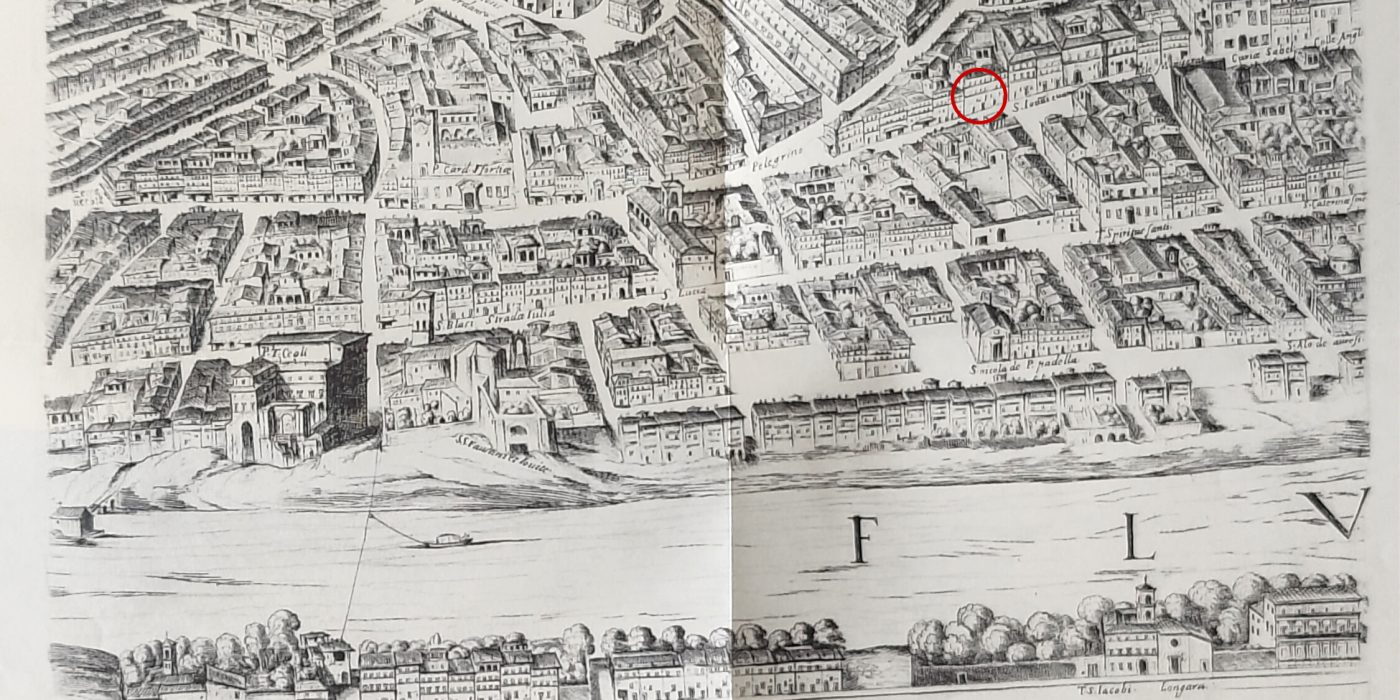
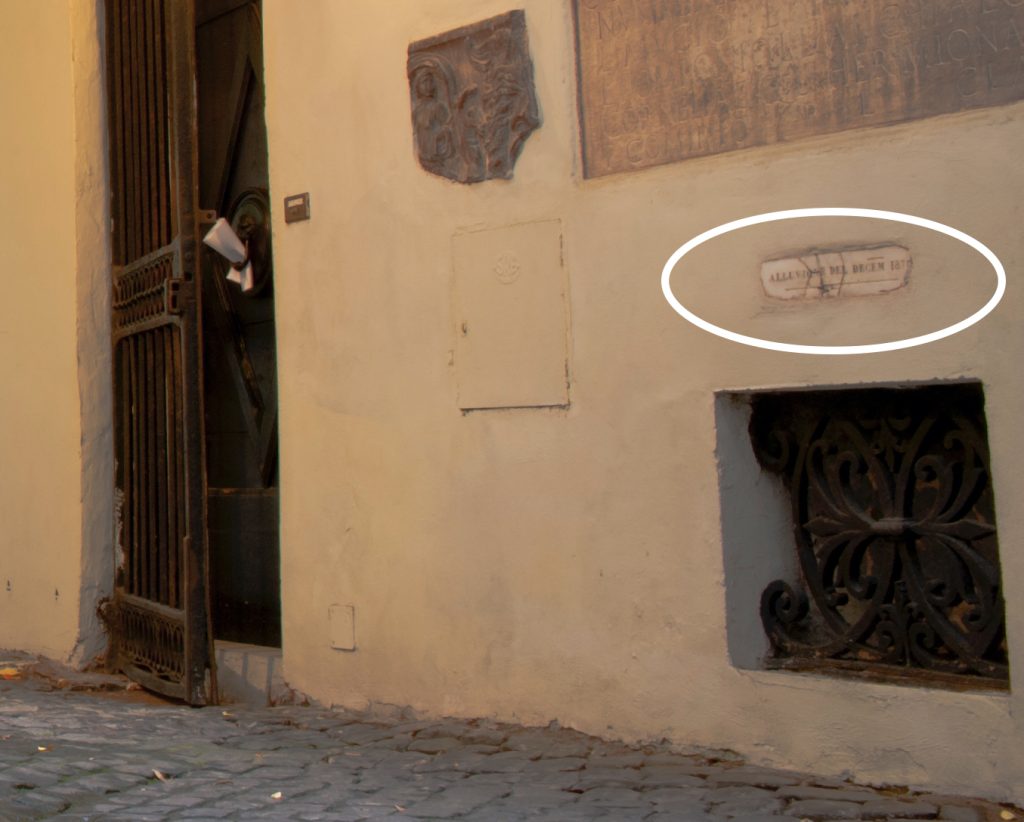
The current Via di Monserrato and its parallel, Via Giulia, were the heart of the medieval Region of Arenula. Via di Monserrato, in particular, even carried the name: Strada Arenula. The name, which later extended to the entire district, derived from the frequent floods of the Tiber River that, upon receding, would leave a thick layer of sand (rena) on the streets. In the inner courtyard of Palazzo Podocataro, among many important Roman inscriptions, there is a more modest 19th-century one that marks the water level reached by the devastating flood of 1870. The sand left by the floods was collected by servants, who used it to clean the copper pots in the grand kitchens of noble households.

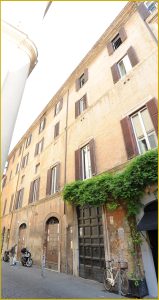
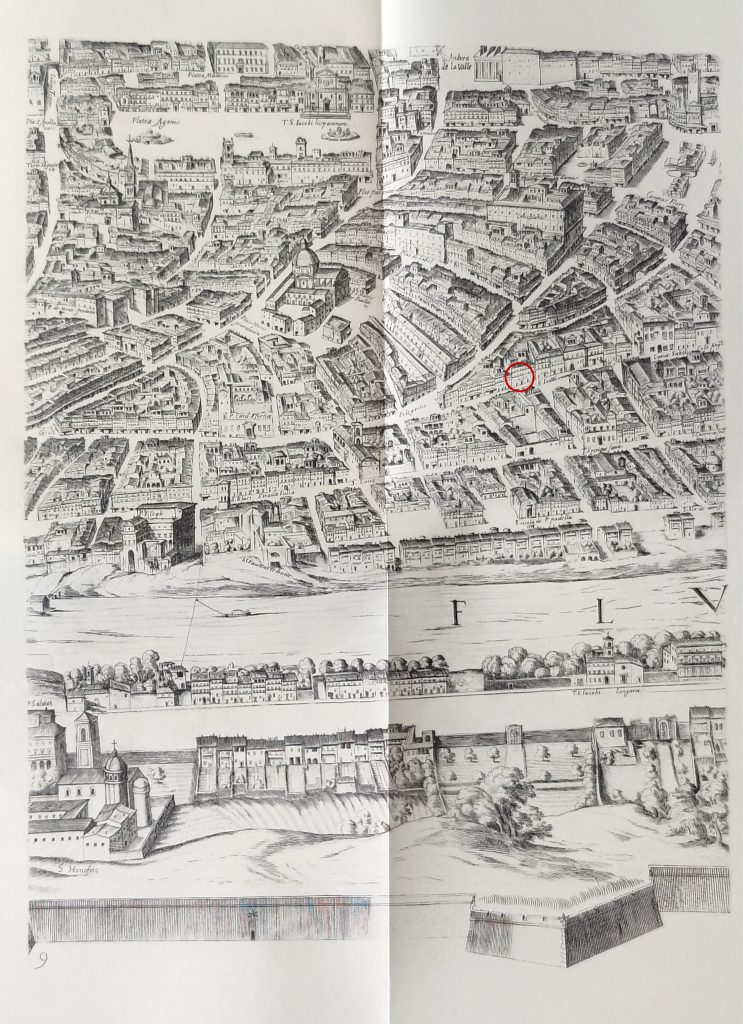
Civil architecture also transformed the street, attracting noble families and high-ranking officials of the Curia. The Corte Savella, the prison of Beatrice Cenci, was extensively remodeled and partially incorporated into the English College. Cardinal Rocci built his namesake palace at number 25, later becoming the Palazzo Pericoli. On Piazza Ricci stood the palace that Cardinal Ricci had purchased between Via Giulia and Via di Monserrato, adorned with graffiti by Polidoro da Caravaggio. Almost opposite Piazza Ricci, at Via di Monserrato 18, 19, 20, and 21, the Cypriot Cardinal Ludovico Podocataro, personal secretary and physician to Pope Alexander VI Borgia, in 1499 built what would become the historic Palazzo Podocataro. The walls of its secret garden cloister were frescoed by Perin del Vaga. On the corner of Piazza Ricci, across from Palazzo Podocataro, towers the imposing Palazzo d’Aste (later Pericoli, and finally Sterbini), where the renowned restaurant Pierluigi now welcomes guests—a favorite meeting spot for American politicians visiting Rome. Following this, the 16th-century Palazzo Incoronati de Planca and nearby houses form the so-called Monte Planca Incoronati, a diverse complex of rental properties known for the lively popular stories of the time, though perhaps not as much as the stories surrounding three other noble residences. One of them was the house-palace of Pietro Paolo Francisci, called della Zecca, which served as a dividing line between Via del Pellegrino and Via di Monserrato. Built by Pietro Paolo, the mint master of Pope Paul II, it was later inhabited by the famous courtesan Imperia. She turned it into one of the most luxurious pleasure houses in Rome, where every detail was the work of renowned artists, who were repaid in kind by the courtesan herself.
Civil architecture also transformed the street, attracting noble families and high-ranking officials of the Curia. The Corte Savella, the prison of Beatrice Cenci, was extensively remodeled and partially incorporated into the English College. Cardinal Rocci built his namesake palace at number 25, later becoming the Palazzo Pericoli. On Piazza Ricci stood the palace that Cardinal Ricci had purchased between Via Giulia and Via di Monserrato, adorned with graffiti by Polidoro da Caravaggio. Almost opposite Piazza Ricci, at Via di Monserrato 18, 19, 20, and 21, the Cypriot Cardinal Ludovico Podocataro, personal secretary and physician to Pope Alexander VI Borgia, in 1499 built what would become the historic Palazzo Podocataro. The walls of its secret garden cloister were frescoed by Perin del Vaga. On the corner of Piazza Ricci, across from Palazzo Podocataro, towers the imposing Palazzo d’Aste (later Pericoli, and finally Sterbini), where the renowned restaurant Pierluigi now welcomes guests—a favorite meeting spot for American politicians visiting Rome. Following this, the 16th-century Palazzo Incoronati de Planca and nearby houses form the so-called Monte Planca Incoronati, a diverse complex of rental properties known for the lively popular stories of the time, though perhaps not as much as the stories surrounding three other noble residences. One of them was the house-palace of Pietro Paolo Francisci, called della Zecca, which served as a dividing line between Via del Pellegrino and Via di Monserrato. Built by Pietro Paolo, the mint master of Pope Paul II, it was later inhabited by the famous courtesan Imperia. She turned it into one of the most luxurious pleasure houses in Rome, where every detail was the work of renowned artists, who were repaid in kind by the courtesan herself.
Imperia, born Lucrezia Grassi, daughter of Diana Corgnati and Paride Grassi, the Pope’s master of ceremonies, is said to have been the young lover of Tommaso “Fedra” Inghirami, secretary to Cardinal Podocataro, as well as Angelo del Bufalo, and finally the banker Agostino Chigi, who had her move to his villa across the Tiber, La Farnesina, where Imperia is depicted in several of Raphael’s celebrated frescoes in the Loggias. Another pleasure house was located in a nearby alley with an unmistakable name: Vicolo Calabraghe (now Vicolo Cellini); at number 31, the small palace of another famed “honest courtesan,” whose name is lost to history but whose ‘virtues’ are still remembered, can still be admired. The third “talked-about” house was located, and still stands, further up Via di Monserrato at number 117, where another courtesan, Tina, lived. The 16th-century small palace, once well-frequented in Tina’s time, fell into ruin after her death. Perhaps due to its scandalous past, no noble family took ownership of it. At the end of the 19th century, the new owner, disregarding outdated prejudices, began a substantial yet respectful restoration amid much criticism from neighbors. He ended the work by having the Latin inscription “TRAHIT SUA QUEMQUE VOLUPTAS” (“Each person is driven by their own pleasure”) carved above the entrance, as if to say, “I do as I please.” The motto of the unknown owner of Tina’s palace in Monserrato fits the thinking of popes like Julius II, Leo X, and Sixtus IV, proud supporters of the three foundational principles that shaped the urban planning of the new Rome, “pro ornamento et decore strate nove” (for the ornament and beauty of the new streets): functionality, decorum, and ornament.
This resulted in straight streets lined with patrician palaces, dignified houses, and churches aligned on either side of the new ‘recte’ (straight) streets, modeled after the Via Alexandrina opened by Pope Alexander VI for the Jubilee of 1500. The ‘recte’ streets that reshaped the Arenula Region included Via del Pellegrino, Via dei Banchi Vecchi, connected to Via di Monserrato, and the Magistralis street named after the pope who redesigned it: Via Giulia. The fan-shaped trident connecting Ponte Sant’Angelo to Ponte Sisto, Piazza Farnese, and Campo de’ Fiori corresponds to the other trident that leads from Piazza del Popolo to the slopes of the Quirinal, Piazza Venezia, and Piazza Navona. However, the Arenula Region’s trident attracted more interest from investors of the time, especially the wealthy Florentine bankers who owned much of Banchi Vecchi and many other noble families that essentially controlled the city’s economy. The ‘recta’ Magistralis of Julius II is adorned with important churches, beginning with San Giovanni dei Fiorentini. Along the road, there are others such as San Filippo Neri (known as Filippino for its modest size, now a design studio), Santa Maria dell’Orazione e Morte, Santa Maria del Suffragio, San Biagio della Pagnotta, Sant’Eligio degli Orafi, Santa Caterina da Siena, and Santa Maria Annunziata del Gonfalone, now the Oratorio del Gonfalone. The now-demolished Monastery of Sant’Aurea once stood on the ruins where the current church of Santo Spirito dei Napoletani was built. Sant’Aurea’s monastery housed many legitimate and illegitimate daughters of Roman nobility, often more for social status than religious vocation. This led to a lax environment, with the young residents slipping out at night, often returning to sleep at the family palace, though not always there. The lenient exit was accompanied by the occasional indiscreet male visitor, an intolerable situation that led to the convent’s closure.
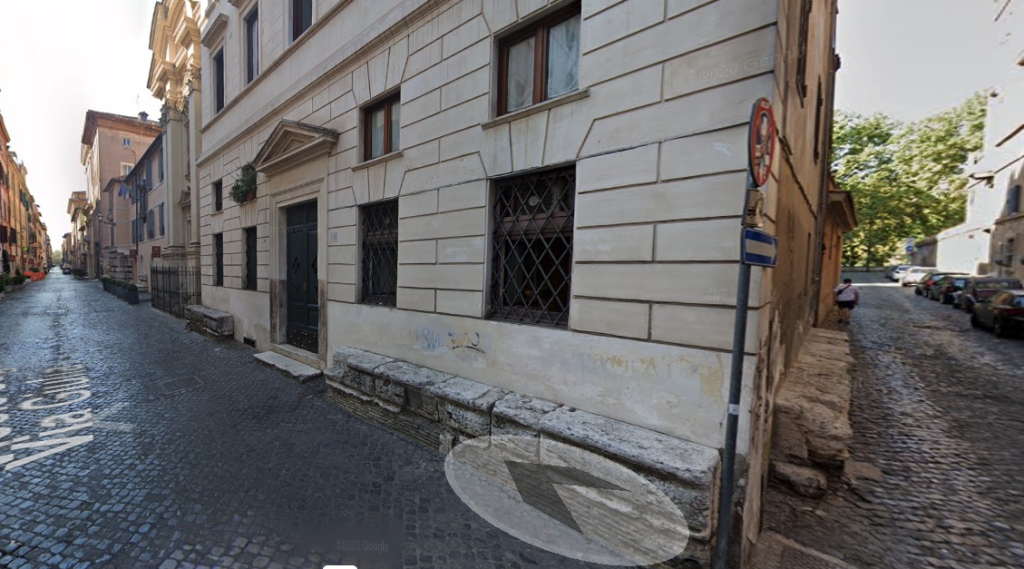
Next to the churches were noble palaces like Palazzo Falconieri, the rear of Palazzo Farnese with its gardens, and the historic Passetto that Farnese and Michelangelo intended to connect the palace to Villa Farnesina across the Tiber. Following this, Palazzo Badoca-Muccioli, Palazzo Lecca di Guevara, and the current Palazzo Ricci, built in 1525 by Nanni di Baccio Bigio for the noble Tuscan family Calcagni, decorated by Polidoro da Caravaggio and Maturino da Feltre. Nanni di Baccio Bigio (real name Giovanni Lippi) also completed the nearby Palazzo Sacchetti, built by Antonio da Sangallo the Younger, who lived there until his death in 1546. He also designed the 16th-century Palazzo Medici Marini Clarelli. Alongside the residential palaces stood the imposing walls of the Carceri Nuove (New Prisons), which replaced the grim Corte Savella. The most imposing construction on its street, Pope Julius II commissioned it from Bramante, the Maestro ruinante (the “ruinous master”) and true mastermind behind the recte streets of the Arenula Region. Bramante began construction on a massive courthouse, the Curia Julia, laying the foundations and raising just under four meters of the structure. All that remains of the unfinished justice palace is the large, protruding rusticated masonry, which the Romans instantly turned into a comfortable seat and nicknamed the sofà di via Giulia. A more modest structure would later be built on top, used as a theater first managed by the Accademia degli Intrepidi and then by the Accademia dei Desiosi. A second theater was located near the Mascherone fountain, originally called Al Carbone (perhaps due to the Carboni family) and later Al Mascherone, though it did not last long. In this urban context, marked by two great architectural presences—Palazzo Farnese dominating the square of the same name and the Cancelleria (Chancellery) on Via del Pellegrino—many other so-called minor palaces flourished, which were by no means less important for the families that commissioned and occupied them. Thanks to these structures, the Arenula Region transformed and gained prestige, fulfilling two of the three guiding principles of the visionary popes: decorum and ornament. In this sense, noble architecture and high-ranking residents required not only exterior care but also deep intellectual nourishment.
Abituali frequentatori dei nobili palazzi dell’Arenula diventano così pittori, scultori, scrittori e poeti ma anche alti prelati e coltissimi cardinali, in gran parte membri dell’Arcadia fondata dall’ex regina Cristina di Svezia sulla sponda opposta del fiume, tra le verdi pendici del Gianicolo nei profondi silenzi del giardino botanico dei Corsini. Questo clima di soffusa cultura favorisce la nascita di grandi collezioni tramutando molti palazzi in tanti musei privati ricchi di quadrerie e importanti raccolte di sculture esposte in sale affrescate dai più celebri pittori del momento. Il palazzo del cardinale e medico di papa Borgia, Ludovico Podocataro, non fa eccezione e con la sua collezione di marmi e iscrizioni romane si colloca tra le più raffinate case-museo della Regione Arenula. © RIPRODUZIONE RISERVATA


 English
  Italian